The situation
This was a highly specialized API product in a market where search volume was low, but every relevant query carried strong buying intent.
The company had already invested months in SEO. Its conversion-focused SaaS landing pages existed, yet they were not earning meaningful visibility for the core searches that mattered to the business.
It needed one connected strategy across technical SEO, website structure, landing-page copy, and commercial search intent - not another disconnected list of optimizations.
The problem
The issue went deeper than copy or metadata. The website did not give search engines a clear enough picture of what the product covered, which page should rank for each intent, or how its capabilities related to one another.
Important commercial searches were either competing for the same destination or had no dedicated page at all. Strong conversion copy could not do its job if the right page was difficult to discover.
What I audited
I started with a technical SEO audit and SaaS SEO strategy review, connecting search behavior, website structure, and the competitive landscape. The review covered:
- The page types Google preferred for every priority query
- The site architecture and URL patterns used by ranking competitors
- Search intent and SERP composition across core commercial terms
- Existing SaaS landing pages with overlapping or unclear keyword targets
- High-intent topics without a dedicated landing page
- Technical and on-page issues weakening relevance
- How clearly the product, capabilities, and use cases were communicated
The audit made the central problem clear: the architecture had to be decided before individual pages could rank consistently.
The architecture strategy
I turned the research into a keyword-to-page map, giving every important query one clear destination within the website.
The new site architecture connected broad capability hubs to focused platform pages and commercial use-case pages. That created a logical path from a general need to the exact feature or application a buyer was searching for.
- Capability hubs organized the product around its core jobs
- Platform-specific child pages captured precise integration intent
- Use-case pages addressed the needs of distinct buyer groups
- Every page received one primary keyword and a distinct purpose
- Titles and descriptions were written for the page’s exact search intent
- Parent-child relationships made the full product offering easier to understand
Keyword optimization was not added after the pages were written. It shaped the architecture from the beginning.
What I changed
With the structure and keyword map in place, I rebuilt the landing-page system around them. The work included:
- Fixing the technical and on-page issues uncovered during the audit
- Rewriting existing commercial pages around their assigned search intent
- Creating new landing pages for previously uncovered opportunities
- Separating overlapping targets to reduce keyword competition
- Applying landing-page SEO and conversion copy to each capability, platform, and use case
- Strengthening the relationships between broader and more specific pages
The result was not a collection of isolated landing pages. It was one connected search system built to support discovery and conversion.
The outcome
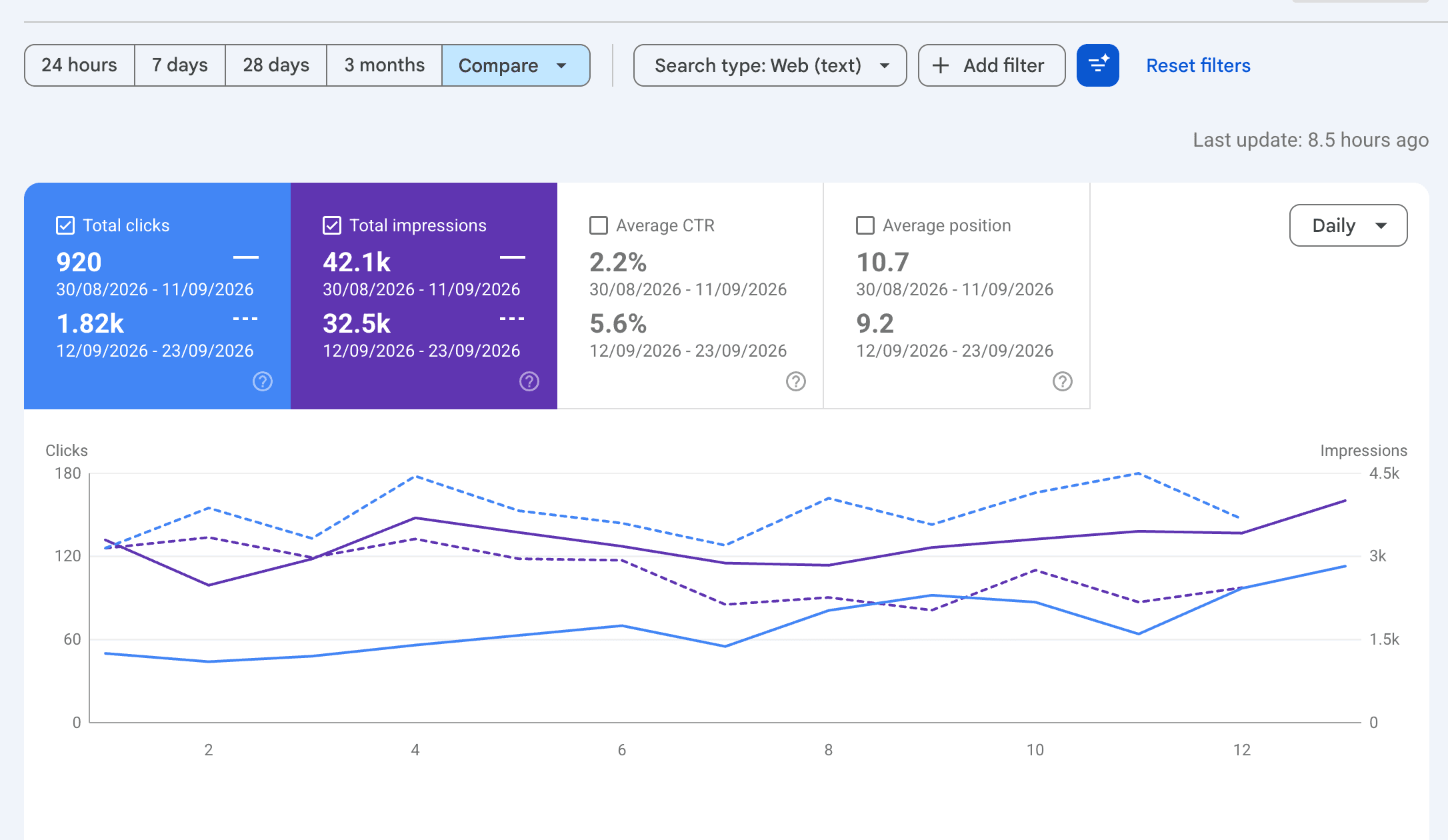
I began the restructuring, landing-page copywriting, and page design on September 12. The work still had to be researched, created, and rolled out during the comparison period, so this data reflects early implementation momentum rather than a finished end state.
Even at this early stage, Google Search Console recorded 1.82K clicks from September 12 to 23, compared with 920 clicks from August 30 to September 11. That is an approximate 98% increase in total organic clicks.
The later period was also one day shorter. On a daily basis, clicks rose from approximately 71 to 152 per day - an increase of roughly 114%.
Search performance became more efficient too. CTR increased from 2.2% to 5.6%, while average position improved from 10.7 to 9.2. The website earned substantially more clicks despite impressions moving from 42.1K to 32.5K.
No new blog posts or backlinks were added during this early result window. The lift appeared while the new architecture, landing-page copy, and design were being implemented.
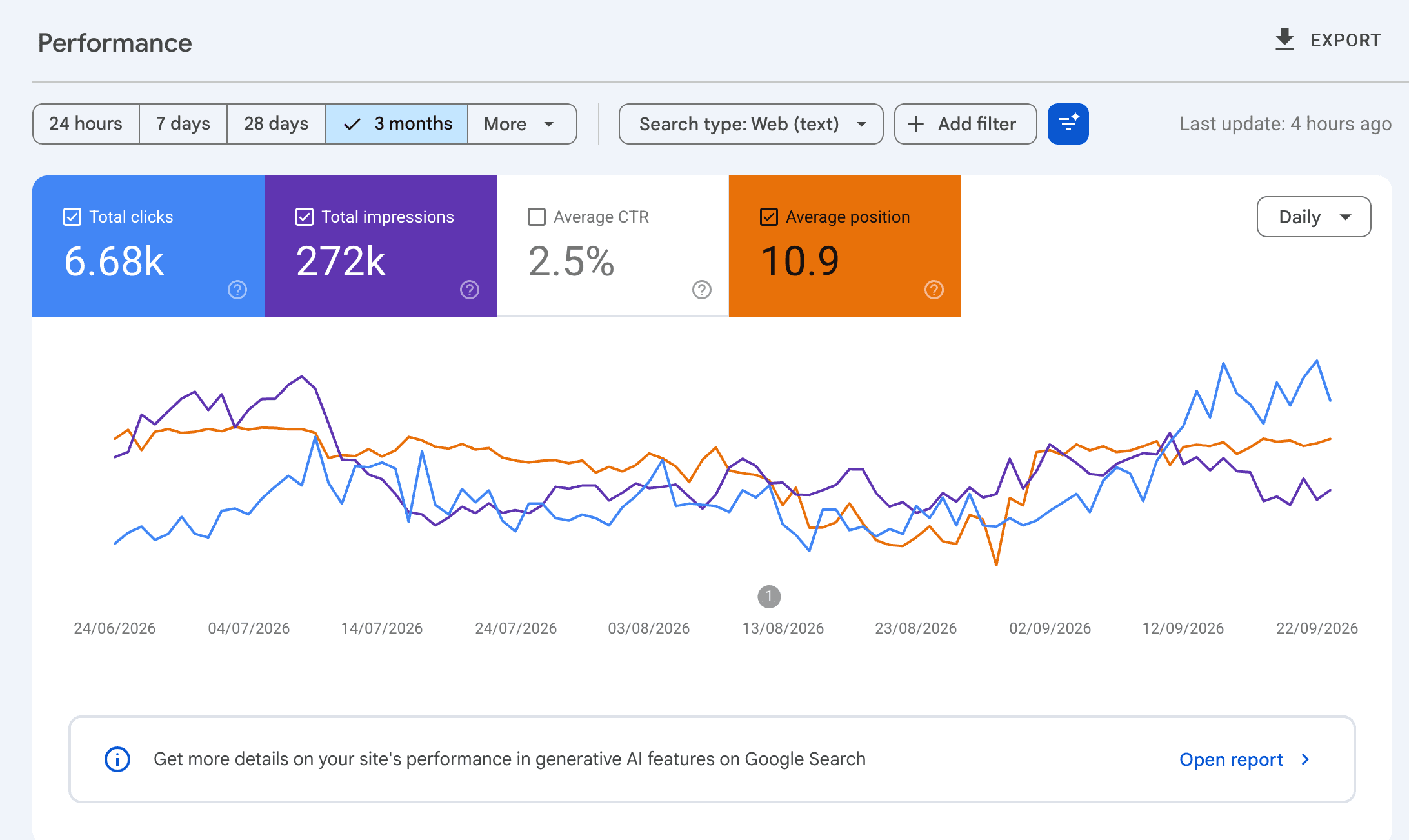
The clearer structure also created a stronger foundation for AEO and GEO by making the product’s capabilities and page relationships easier for search and AI systems to interpret. These pages were still early in their lifecycle, with more room to mature.
The impact
GSC performance
The wider three-month trend
The takeaway
For a niche product, SEO is not simply a volume game. When every relevant search matters, the website needs one clear intent, one appropriate destination, and a logical relationship between every important page.
Architecture determines whether strong copy can be discovered. Clear page purpose also gives search engines and AI answer systems a better foundation for understanding, retrieving, and citing the product.
Client identity, website details, and commercially sensitive information have been withheld for confidentiality. The approximate 98% lift is calculated from the displayed Search Console totals of 920 and 1.82K clicks. The approximate 114% daily lift accounts for the 13-day baseline and 12-day later period. Work began on September 12 and implementation continued throughout the comparison window, so these figures represent early directional results. No new blog posts or backlinks were added during this period.